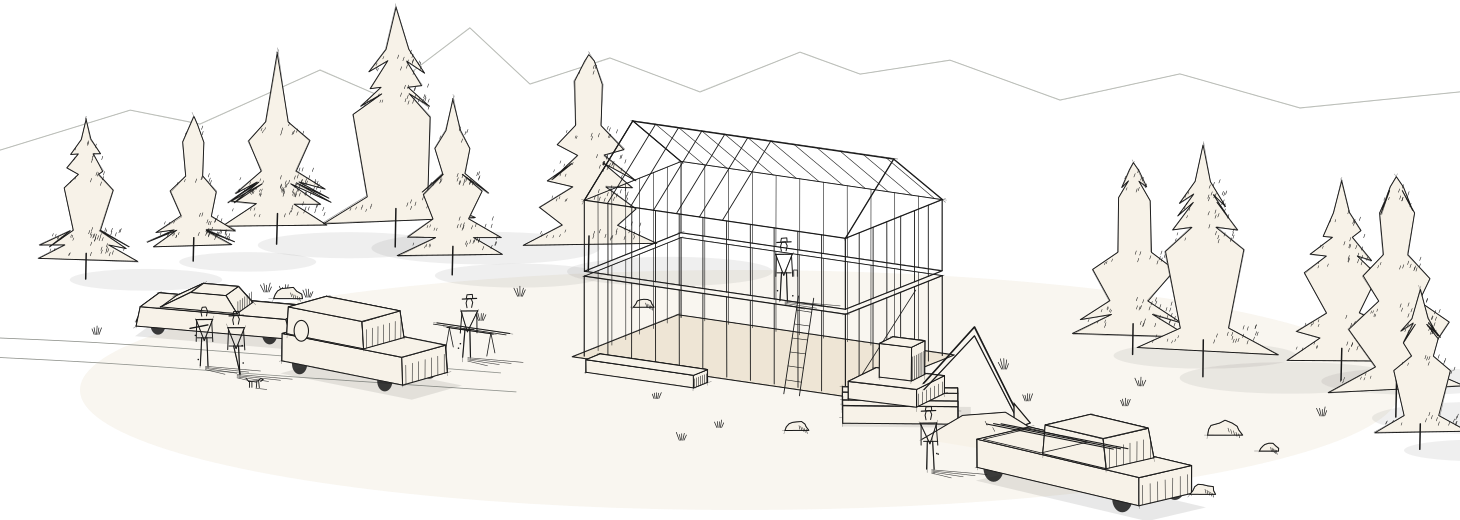
Building in Jackson Hole While Running a Company
Jackson is a small town. About 10,700 people live in the town itself, and roughly 23,000 in all of Teton County. A large share of the homes being built here belong to people who live somewhere else most of the year and run a business, a fund, or a family from there.
That creates a specific problem. The project is here. The owner is not.
Why distance makes building harder
Construction runs on decisions. Which window, which stone, which detail at the roof edge. On a custom home there are hundreds of them, and many need answers within days to keep the schedule moving.
When the owner is two time zones away and in meetings all day, decisions slow down. The builder fills the gap by making assumptions, or the schedule slips while everyone waits. Either outcome costs money.
Distance also means the owner cannot see the work. Photos help, but they do not show whether the framing matches the drawings or whether the mechanical rough-in left room for the cabinetry.
What makes building here different
Jackson Hole adds a few local factors on top of the usual challenges.
The building season is short. Work that depends on dry ground and warm temperatures has a narrow window. A delay in spring can push exterior work into the following year.
Sites are demanding. Slopes, snow loads, wildlife, views, and access all shape the design and the cost.
The trade pool is small. Good subcontractors are booked well in advance. Lining them up early matters more here than in a large metro area.
Reviews take time. Projects go through local review and permitting, and owners who plan for it early avoid surprises.
How owners make it work
The owners who build well from a distance tend to do a few things consistently.
They assemble the team early, before buying land if possible, so the architect and builder can weigh in on the site.
They set a clear budget and decision schedule up front, so the team knows when answers will come.
They get regular, plain-language reports with photos and a short list of open decisions.
And many of them put someone local on their side. An owner's representative who lives here can walk the site, sit in on meetings, and handle the daily coordination, while the owner keeps running everything else.
The short version
Building here while living and working somewhere else is common. It works best when someone on the ground represents you, so the project keeps moving whether or not you are in town.